
Related Reading
- EU Launches First AI Act Enforcement Against OpenAI and Anthropic: What It Means — the EU's first AI Act enforcement — what regulation means for publishers.
- FTC Subpoenas OpenAI and Anthropic: What the Federal AI Safety Probe Means for You — the FTC's 50+ page probe into OpenAI and Anthropic over AI agent safety.
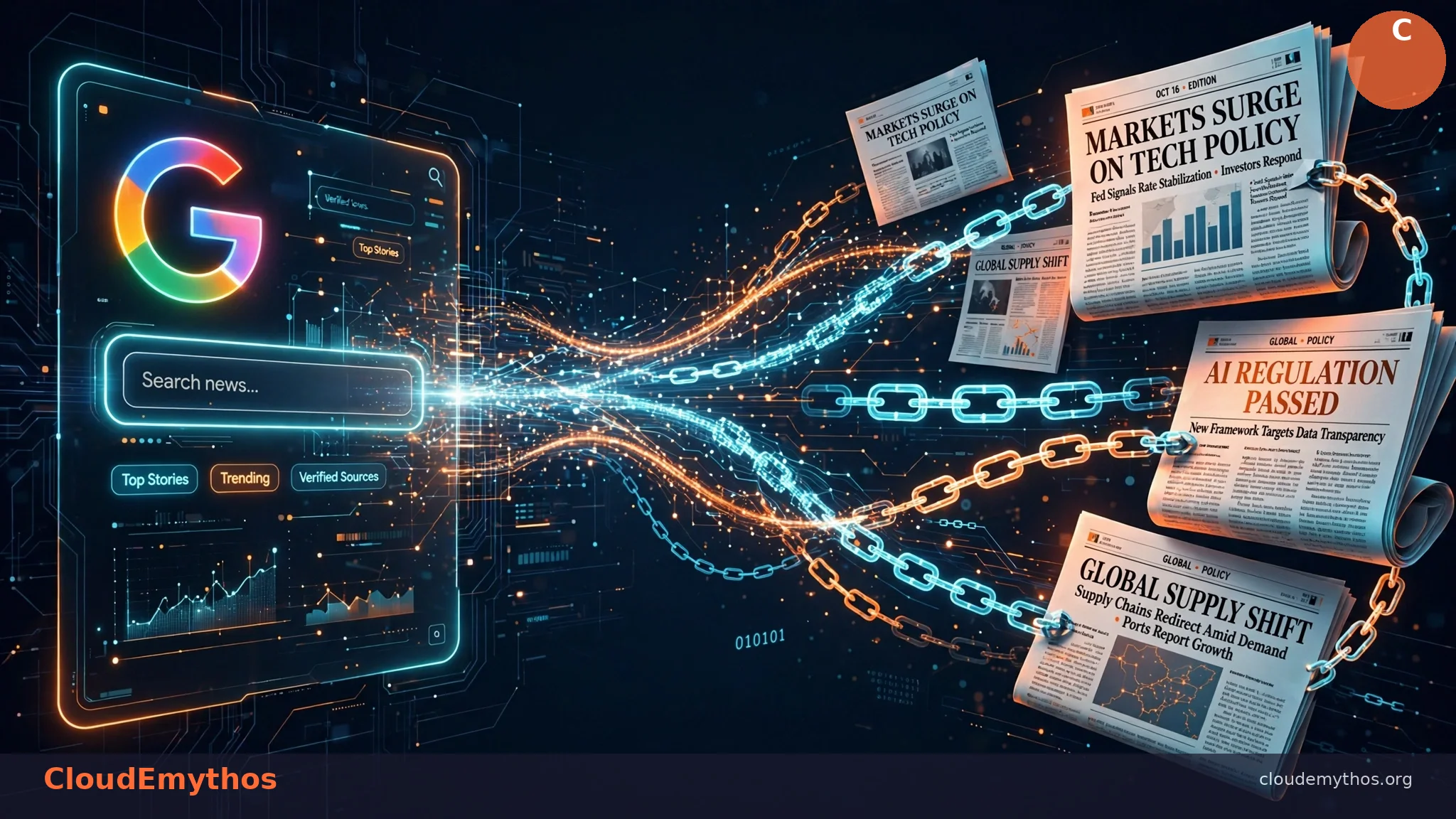
Google just made its biggest move yet in the war over who pays for news in the AI era. On October 15, 2026, the search giant announced that its AI news licensing program — a pilot that started last year with partners like The Washington Post — now covers more than 400 publications worldwide. The newest sign-ups: CNN, the Financial Times, Axios, and a group of US local newsrooms.
For publishers, Google promises two things: money (undisclosed amounts) in exchange for enhanced content rights, and attribution — AI features built on their content will carry clear credit and direct links. CNN's Sam Felix, senior vice president of strategic partnerships, said the tools will help the network "explore new ways to discover and engage audiences." For CNN, the deal is also symbolic: it's the first major partnership since Paramount Skydance completed its acquisition of Warner Bros Discovery, as CEO David Ellison positions the combined company as a technology-driven media business.
So: publishers get paid, get credit, get links. Problem solved, right? Not so fast. This is CloudEmythos — we read the fine print, and in this case there is no fine print available. Terms undisclosed. No published list of the 400 publications. No selection criteria. No clarity on what "enhanced content rights" actually grants Google. Here's what we know, what we don't, and what it means for everyone who isn't on the guest list.
The Lifeline Case: Why Publishers Signed
Start from the publisher's chair. Your business has been getting squeezed from two directions for years.
First, referral traffic is collapsing. AI-generated answers in search now let users consume information without clicking through to the websites that produced it. Every answer Google's AI composes from your reporting is a reader who never visits your homepage, never sees your subscription offer, never scrolls past your ads. For ad-supported newsrooms, that traffic is revenue.
Second, your content has been training the models for free. Publishers are actively stepping up legal efforts to stop AI companies from using their work to train large language models without permission — but lawsuits take years, cost millions, and outcomes are uncertain. Meanwhile the scraping continues.
Against that backdrop, a deal that pays real money, with credit and links attached, looks like a lifeline:
1. Cash now beats lawsuits later. Litigation against well-funded AI companies is a marathon. A licensing payment is immediate, recurring revenue for work already produced. For local newsrooms in particular — the segment of the industry closest to collapse — a new revenue line can be the difference between surviving and shutting down.
2. It establishes that the content has value. For years, the tech industry's position was effectively that training on published content was acceptable use. A paid license is a concession: your journalism is worth paying for. That principle matters beyond Google — it strengthens publishers' negotiating position with every other AI company.
3. Attribution and links are real concessions. Google committing to clear attribution and direct links in AI features is not nothing. As we covered in our report on Google's new inline links in AI Overviews, the company is under real pressure to reconnect AI answers to their sources. A contractual obligation to credit publishers is harder to walk back than a product announcement.
4. Defensive positioning. CNN explicitly tied the deal to its strategy of protecting its intellectual property, noting it has multiple commercial partnerships and ongoing discussions with other industry players. Signing with Google doesn't stop anyone from signing with others — and being inside the tent may beat being outside it.
The Trap Case: Why This Might End Badly
Now flip the board. Every point above has a shadow.
1. The terms are secret, so the "fair price" is whatever Google says. Financial terms were not disclosed — not per publisher, not in aggregate, not even as a range. When 400 organizations negotiate individually against one buyer who also controls their search traffic, the information asymmetry is extreme. Nobody outside the room knows whether the local newsrooms got a meaningful rate or a token payment. Secrecy benefits the party with the most leverage, and that party is not the publishers.
2. Google chooses who gets paid. Four hundred publications sounds like a lot until you ask: four hundred out of how many? There is no published list and no stated criteria. The program rewards incumbents — CNN, the Financial Times, Axios — while independent and niche publishers get nothing. A licensing regime administered by the search monopolist effectively lets Google pick winners in journalism.
3. "Enhanced content rights" is doing a lot of heavy lifting. Publishers will provide enhanced rights "allowing Google to develop new AI features." What does that grant, exactly? Broader ingestion? Real-time feeds? The right to synthesize and redistribute? Without the text, publishers may be trading away more than they realize — and once AI features are built on your content, the dependency runs one way.
4. Links don't equal traffic. Google promises direct links in AI features. But a link buried beneath a complete AI-generated answer is not the same as the click you used to get from a blue-link search result. The core economic problem — AI answers that satisfy the query without a visit — isn't solved by attribution. It's softened. Publishers cheering the links should watch the actual referral data before declaring victory.
5. It doesn't settle the legal fight. These are commercial deals, not settlements. Publishers' broader claims about training-data use remain unresolved, and a licensing check from Google could even complicate litigation — "we offered to pay, you negotiated a price" is a defense-friendly narrative. Each publisher's legal team will need to think carefully about what the deal does and doesn't waive.
6. The precedent could be a ceiling, not a floor. If Google's undisclosed rate becomes the market reference point, other AI companies can point to it as the "established" price for news content. A deal struck under duress — declining traffic, expensive lawsuits — may anchor prices at a level that reflects weakness rather than value.
What This Means for Independent Publishers and Bloggers
If you run a small publication, a niche blog, or a one-person operation like CloudEmythos, here's the honest read: you are not getting invited to this program anytime soon. It is built for organizations Google's partnership team can negotiate with at scale. That's not a complaint — it's a planning assumption. So what do you do?
Double down on what the licensing program can't replace: original reporting. Licensed content deals cover publishers with newsrooms. AI systems still need fresh, first-hand information to cite — and the more original your reporting, the more likely you are to be the source an AI answer credits. The publishers' own leverage in these deals comes from the same place: content that can't be synthesized from elsewhere.
Build the direct relationship now. Every publisher in this story is reacting to the same structural shift: platforms mediate your audience, and platforms change the terms. Email subscribers, RSS readers, community members — an audience you can reach without an algorithm's permission is the only durable asset. The licensing checks are nice; the mailing list is yours.
Optimize for citation, not just ranking. We detailed the mechanics in our AI Overviews piece: structured, quotable content with clear answers, strong E-E-A-T signals, and Preferred Source status make you the publisher an AI response names. Whether or not Google links back generously, being the cited source builds the brand recognition that survives the click-through decline.
Watch the data, not the announcements. When Google says AI features will drive engagement, measure it yourself. Track referral traffic from AI surfaces, watch how attribution actually renders, and share findings publicly. The industry's collective bargaining position depends on shared information — and right now, Google is the only party with full visibility.
The Bottom Line
Is it a lifeline or a trap? The honest answer: it's both, and which one it is depends on the terms nobody will show you. For a struggling local newsroom, a licensing payment is real money that keeps reporters employed — that's a lifeline by any reasonable definition. For the industry as a whole, a secret, Google-administered compensation scheme that covers 400 chosen outlets while AI answers continue to hollow out referral traffic looks uncomfortably like a trap with a welcome mat.
The question to watch over the next year isn't whether more publishers sign — they will. It's whether the checks grow, the links convert to traffic, and the undisclosed terms ever see daylight. Until then, the smartest position for everyone outside the program is the one independent publishers have always held: make something original, own your audience, and verify everything — including the press releases.
CloudEmythos is an independent publication. We were not consulted on, invited to, or compensated in connection with Google's licensing program — which is exactly why we can call it like we see it.

No comments:
Post a Comment