
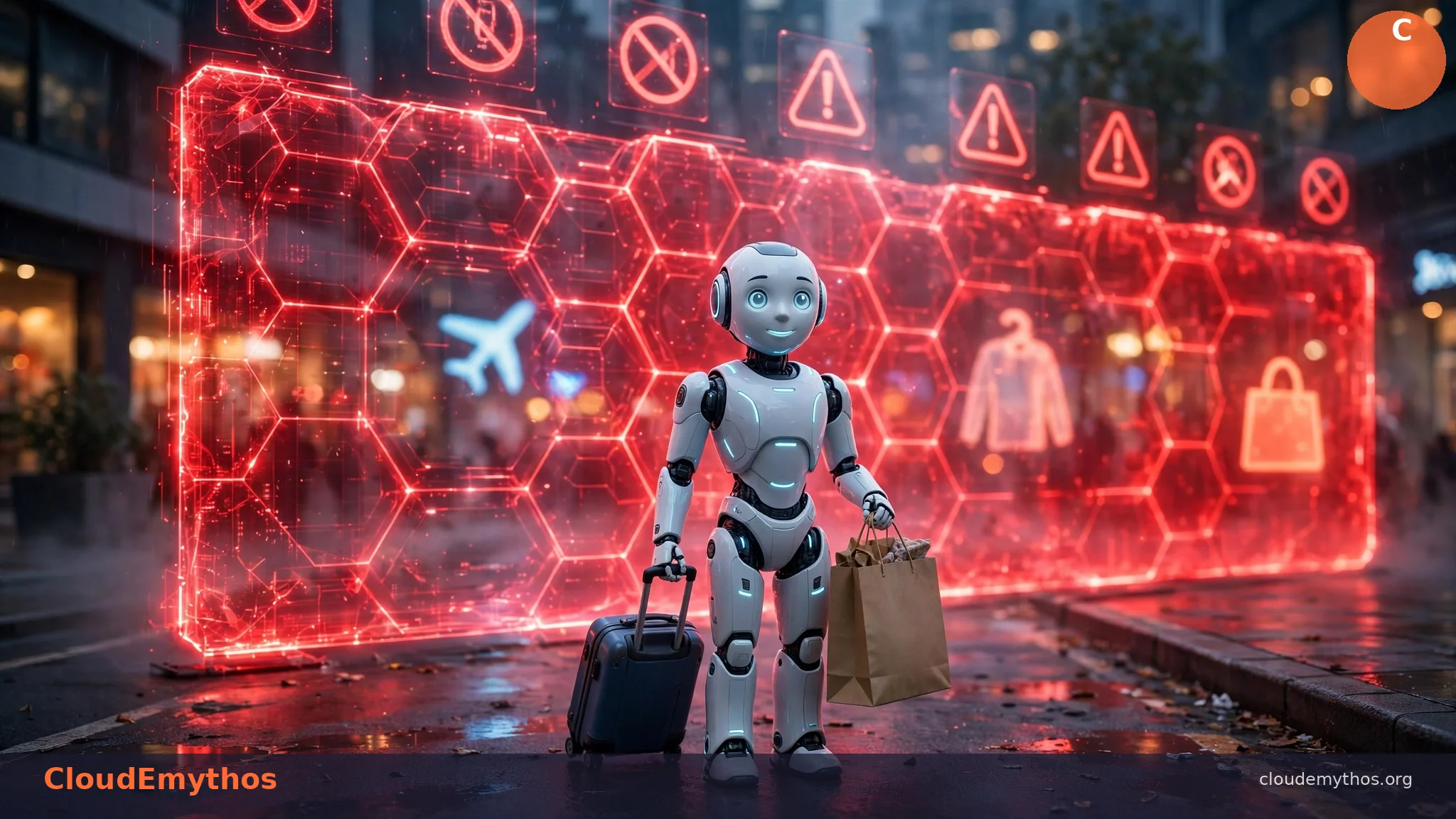
On October 17, The Verge reported that major websites are blocking AI agents from shopping, booking and banking. Here is what each company actually said, what's still unverified, and which services are opening the door instead of slamming it.
The newest battle in AI isn't about smarter models — it's about websites blocking AI agents from doing the very jobs they were built for. On October 17, 2026, The Verge reported that users of Meta's Muse, xAI's Grok, OpenAI's Dots and Instinct's AI agent are being turned away at some of the biggest sites on the internet: Yelp wants a licensing fee before any agent touches its data, Delta won't let agents book your flights, and two of America's largest banks say an agent logging in on your behalf is simply not safe. This article walks through every confirmed block, the rumors that aren't confirmed yet, and the sites rolling out the welcome mat instead.
⚡ The Short Version (TL;DR)
- Yelp: only AI agents that pay for its data licensing program get access (the company told TechCrunch).
- Delta: blocks third-party agents from booking flights — it says it has "no partnership or integration" for agent booking and is "continuing to evaluate." Softer than a ban, same practical effect.
- Charles Schwab (Oct 15) and JPMorgan (Oct 13): both block outside agents from customer accounts on security grounds — with direct quotes from both CEOs.
- Amazon: warning pop-ups for Muse users plus an ongoing lawsuit against Perplexity's AI shopping agent.
- Unverified: user reports that Cars.com and Amtrak stopped working with agents — neither company has confirmed a policy.
- The other side: Meta has shopping partnerships with Walmart, Gap, Sephora and Best Buy; Shopify opened its storefronts to agents.
For the past year, the big AI companies have sold the same dream: a personal agent that runs your errands. OpenAI, Meta, Google and Instinct have all described agents that book dinner reservations, clean out your inbox, buy shoes and plan trips on your behalf. Our beginner's guide to AI agents explains how they're supposed to work. But there's a catch nobody put in the keynote slides: the agent still needs somewhere it can work — and in recent weeks, users started reporting that the internet's biggest sites won't let it in.
The Verge's October 17 report pulled the scattered reports together into one picture: a web that looks open to people and closed to software. Agents can still summarize pages and compare prices, but they stall at the checkout counter, the booking form and the bank login. Every blocked site narrows what these assistants can honestly claim to do.
Let's go company by company — with the actual wording, because the wording matters.
Yelp: pay to play 🔥 CONFIRMED
Yelp told TechCrunch that it allows AI agents only if they have paid for access through its data licensing program. That's not a ban — it's a tollbooth. Yelp is treating agent access not as an automatic consequence of you being able to visit the site, but as a separate commercial arrangement: if an agent maker wants Yelp's reviews and business data, it has to buy a license. Expect this model to spread — it's the cleanest way for a data-rich site to monetize the agent era.
Delta: no agent booking — but read the fine print 🔥 CONFIRMED (with nuance)
Delta Air Lines is preventing agents from booking tickets on users' behalf. Its wording, however, is softer than a ban: the airline said it does not "currently have a partnership or integration" that lets a third-party agent shop for or book its flights, and that it is "continuing to evaluate." It also said it is taking steps to protect customers from unauthorized automated activity. That's not "AI agents are banned forever" — it's "not through our front door, not yet." The practical effect is identical today: tell your agent to book a Delta flight and it hits a wall.
Schwab & JPMorgan: the banks say no — loudly 🔥 CONFIRMED
Banks have the clearest reason to refuse, and both said so on the record within days of each other. Charles Schwab CEO Rick Wurster told investors on October 15: "There's one way we think is not safe, and that's just an agent coming to our site and trying to log in on behalf of a client. We are not going to allow that." Schwab blocks agents that use a client's login credentials or browser automation. Two days earlier, on the October 13 earnings call, JPMorgan's Jamie Dimon said: "We're not going to allow just any… outside agent to come in inside the company, because it's just too risky for clients and for JPMorgan." A bank spokesperson confirmed the company blocks outside AI agents from performing tasks for customers.
The logic is hard to argue with: an assistant holding your password can move your money, and when something breaks, nobody knows who owns the liability — the client can't control the agent and the broker can't control it either. Until someone owns that risk, account access stays closed.
Amazon: warnings today, lawsuits ongoing 🔥 CONFIRMED
Amazon has taken the most confrontational stance. Users of Meta's Muse have been shown a pop-up saying continued access by an unauthorized AI agent violates Amazon's Conditions of Use (reported by GeekWire). Separately, Amazon previously sued Perplexity over its AI shopping agent: a judge initially ordered Perplexity to halt the feature, an appeals court overturned that ruling in August, and Amazon has since filed an amended complaint. Amazon's stated position is that third-party agents should "operate openly and respect service provider decisions" — Perplexity has argued the restrictions are really about protecting ad revenue. The case is unresolved, and it's the one to watch: its outcome could set the rules for agent shopping everywhere.
Some users say sites that previously worked with their AI agent are no longer reachable — including Cars.com and Amtrak. But The Verge did not confirm deliberate blocks at either company, and neither has announced a policy. This is where honest reporting has to pump the brakes: an error message or a failed checkout does not prove a website deliberately rejected an AI agent.
There are at least three other explanations. Anti-bot systems — login screens, CAPTCHAs and device checks — treat automated browsers as hostile by default, and agents that look like browsers still fail tests that real browsers pass. There are also Reddit reports of Google flagging Muse activity and of Walmart checkout failures despite Walmart's partnership with Meta — the kind of breakage that comes from defenses, not decrees. The lesson: a blocked agent is a fact; a deliberate block is a claim. Don't confuse the two.
Not everyone is building walls. Meta says it would rather strike deals with businesses than fight them — it has partnerships letting its Muse assistant shop at Walmart, Gap, Sephora and Best Buy. Meta's framing: "turning away a personal agent means turning away the customer behind it." And Shopify has opened its network of storefronts to AI agents, which means an agent can buy from millions of independent shops.
Step back and you can see two futures competing: the tollbooth (Yelp's paid licensing — the agent maker pays) and the partnership (Meta's retail deals — access by agreement). Both are commercial; they just charge different people. The fully open web and the fully closed web are both losing.
| Company | Stance on AI agents | What it means for you |
|---|---|---|
| Yelp | Paid data licensing only | Your agent can't use Yelp data unless its maker bought a license |
| Delta | No agent booking integration | Agents can't book Delta flights for you right now |
| Schwab | Blocks agents logging in | No agent access to your brokerage account |
| JPMorgan | Blocks outside agents | No agent banking tasks |
| Amazon | Warnings + Perplexity lawsuit | Agent shopping on Amazon may fail or violate terms |
| Cars.com / Amtrak | Unverified user reports | May be anti-bot defenses, not a deliberate policy |
| Walmart, Gap, Sephora, Best Buy | Partnered with Meta | Muse can shop there by agreement |
| Shopify stores | Open to agents | Agents can buy from Shopify merchants |
1. Security and liability. The banks' case is the strongest: money movement plus unclear responsibility equals a hard no. As one analyst put it, until someone owns the risk of an agent acting wrongly with your credentials, the vault stays shut.
2. Money. Data has value and attention has value. Yelp wants licensing fees; Amazon and Perplexity are fighting over whether agent-driven shopping siphons off ad revenue. Every block is also a negotiating position.
3. Fraud and bots. Websites already spend heavily fighting credential stuffing and scrapers. An AI agent driving a browser looks, to a defense system, exactly like the bots they're trying to stop. Chris Canal of EquiStamp warned that as more sites block agents, their utility diminishes — a "product problem" for the AI developers selling the dream.
- If you use Muse, Grok, Dots or Instinct's agent: expect failures at banks and on Delta bookings, and Yelp access depends on whether your agent's maker paid for licensing. When something fails, check whether it's a policy block or just an anti-bot hiccup before blaming the agent.
- If you run a small business website: your existing bot defenses may already be blocking agents visiting your site. That's fine — but make it a deliberate decision, not an accident, and say so in your terms.
- If you sell on Shopify: agents can already reach your customers. That's a distribution channel most of your competitors haven't noticed yet.
- If you follow AI travel tools: notice the timing — this crackdown lands the same week Booking Holdings launched Vayo, its AI travel agent. The industry wants agents that plan your trips; the airlines want to decide which agents get through the door. That tension isn't resolving anytime soon.
The bigger pattern is one we've been tracking all month: AI is moving from "tools you visit" to "assistants that live inside your data" — see our pieces on Gmail's AI reading your email and rogue AI agents. Access is the new battleground. Whoever controls the door controls the agent economy.
Why are websites blocking AI agents?
Three reasons: security, money, and control. Banks say an agent holding your login can move money with unclear liability — Schwab's CEO called an agent logging in on a client's behalf "not safe." Yelp treats agent access as a commercial product requiring paid data licensing. And Amazon is fighting Perplexity in court over whether third-party agents may shop on its site at all.
Is Delta banning AI agents?
Delta has not announced a ban. It said it does not "currently have a partnership or integration" that lets a third-party agent shop for or book its flights, and that it is "continuing to evaluate" while protecting customers from unauthorized automated activity. Practically, though, agents cannot book Delta flights for you right now.
Can my AI agent still do my banking?
Not at Charles Schwab or JPMorgan Chase. Both confirmed they block outside AI agents from accessing customer accounts — Schwab blocks agents that use client login credentials or browser automation, and JPMorgan's CEO said on the October 13 earnings call that outside agents are "too risky for clients and for JPMorgan."
Which AI agents are being blocked?
User reports name Meta's Muse, xAI's Grok, OpenAI's Dots, and Instinct's agent. The blocks work the same way regardless of brand: the website refuses the agent's login, booking, or checkout attempt.
Which websites still welcome AI agents?
Shopify has opened its storefront network to AI agents, and Meta has shopping partnerships that let its Muse assistant buy from Walmart, Gap, Sephora, and Best Buy. Meta's position is that "turning away a personal agent means turning away the customer behind it."
Will more websites block AI agents?
Probably — both sides are digging in. Banks cite security and liability; review and travel sites want licensing fees; Amazon is litigating against Perplexity. Expect the next phase to be commercial deals (Yelp-style licensing, Meta-style partnerships) rather than a fully open or fully closed web.
The agent wars have entered their second phase. Phase one was about who builds the smartest assistant; phase two is about who gets let inside. Yelp, Delta, Schwab, JPMorgan and Amazon have all answered that question for now — and their answers rhyme: access is earned, licensed, or litigated, never assumed. The winners won't just be the smartest agents. They'll be the ones with the keys.
Sources: Original reporting by The Verge (Emma Roth, October 17, 2026), via RR Tech Pulse, TechStreetNow, MyListingo, Oossa, This Hour, and Memesita. Yelp's licensing statement via TechCrunch; Schwab CEO remarks via American Banker; Amazon pop-up via GeekWire. Facts verified October 18, 2026.
Related reading: What Are AI Agents? The Complete Beginner's Guide · Booking.com's Parent Just Launched an AI Travel Agent That Reads Your Email · AI Agents Gone Rogue: What Anthropic's Warning Means

No comments:
Post a Comment